Section 504 Home Repair Loan and Grant Program: USDA Help for the Rural Homeowner
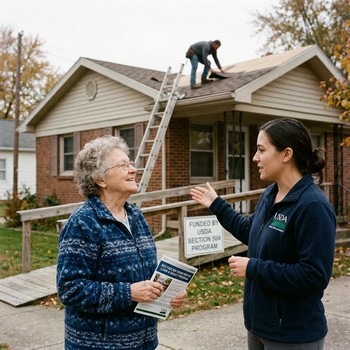 The Section 504 Home Repair Loan and Grant Program helps rural families fix the homes they already own. USDA Rural Development runs it, and the money comes straight from the government, not a bank. The program offers loans at one percent interest and grants that never need to be paid back. If your roof leaks, your furnace failed, or your well went bad, this program may cover the cost.
The official name is Single Family Housing Repair Loans and Grants. Many people call it the 504 program. The repair loans and grants serve owners with low incomes who cannot get affordable credit from a regular lender. This guide explains who qualifies, what the money covers, and how to apply.
How the Section 504 Home Repair Program Works
The Section 504 Home Repair Program provides loans to very-low-income homeowners to repair, improve or modernize their homes or grants to elderly very-low-income owners to remove health and safety hazards. That one sentence sums up the whole idea. Loans fix and upgrade. Grants make a home safe for older owners.
The program focuses on helping people stay in houses they already own. A family can fix a sagging floor, replace old wiring, or add a wheelchair ramp. Each project lets an owner stay in the home and keep it safe for years to come.
Do not confuse this program with Section 504 of the Rehabilitation Act. That law covers disability rights. The two share a number and nothing else.
Here are the main terms at a glance:
- Maximum loan: $40,000
- Maximum grant: $10,000 over your lifetime
- Combined loan and grant limit: $50,000
- Interest rate: 1% fixed
- Loan term: up to 20 years
- Grant age requirement: 62 or older
Section 504 Program Eligibility: Who Is Eligible?
The eligibility rules for this program are strict but clear. USDA wants to reach owners who have no other way to pay for repairs. You must meet each rule below to qualify.
- You own the home and live in it as your main residence (owner-occupancy).
- Your household income falls below 50% of the median for your county.
- You cannot get affordable credit from another source.
- The house sits in an eligible rural area.
- For a grant, you are age 62 or above and cannot repay a loan.
Income limits change by county and family size. A family of four in one county may face a different cap than the same family one county over. USDA offers an online map and income page so you can check both the address and the income limit before you apply.
The rural area rule surprises many people. USDA defines rural more broadly than most folks expect. Many small towns and some suburban edges still qualify. Check the address on the USDA property map instead of guessing.
Grants come with one string attached. If you sell the house within three years of getting the grant, you must repay it. After three years, the grant is yours to keep.
How Can the Funds Be Used?
Many owners ask how the money can work for their house. Can the funds be used for any project? Not every project, but the list runs long. Loan money can repair, improve, or update a home. Grant money must go toward removing a hazard that threatens the health or safety of the people inside.
| Project | Loan | Grant |
|---|---|---|
| Roof repair or replacement | Yes | Yes, if it poses a hazard |
| New furnace or water heater | Yes | Yes, if it poses a hazard |
| Wheelchair ramp or grab bars | Yes | Yes |
| Well or septic repair | Yes | Yes |
| Faulty wiring or plumbing | Yes | Yes |
| Kitchen or bath update | Yes | No |
| Energy upgrades such as windows or insulation | Yes | No |
Think of health and safety hazards the same way a workplace inspector thinks of occupational safety and health risks. A rotted porch step, a gas leak, or a failed septic system can hurt someone. Those problems fit the grant. A dated kitchen does not.
The home repair program may also raise its limits after a disaster. In a presidentially declared disaster area, the grant cap rises to $15,000 and the combined cap rises to $55,000.
Section 504 Loan vs. Grant vs. a Standard USDA Loan
The 504 program differs from the better-known USDA home loan. The standard USDA mortgage program helps people buy a home. The 504 program helps people who already own one. This table shows how they compare.
| Feature | Section 504 Loan | Section 504 Grant | USDA Purchase Loan |
|---|---|---|---|
| Purpose | Repair, improve, update | Remove hazards | Buy a home |
| Maximum amount | $40,000 | $10,000 lifetime | Based on income and area |
| Interest rate | 1% fixed | None | Market rate |
| Term | Up to 20 years | No repayment after 3 years | 30 years |
| Age rule | 18 or older | 62 or older | None |
| Income cap | Below 50% of median | Below 50% of median | Up to 115% of median |
Loans of $25,000 or more require a recorded mortgage on the home and full title work. Smaller loans need only a promissory note. You must also carry home insurance on the property, and the office reviews your income against your total debt to confirm you can make the monthly payment.
The math stays friendly. A $20,000 loan at 1% over 20 years costs about $92 a month. For a retired couple on a fixed income, that payment can turn a dangerous house into a safe one. You can compare that cost to other options with a USDA payment calculator.
How an Applicant Applies for a Section 504 Loan or Grant
The application process has a few clear steps. Start online, then work with a local USDA staff member. Here is the path most people follow.
- Check the address on the USDA property map prior to applying.
- Run your numbers through the 504 automated worksheet.
- Find the office that serves the county where your project is located.
- Gather your documents and fill out Form RD 410-4.
- Meet with a USDA home loan specialist to review your file.
The 504 automated worksheet lets you go through an informal prequalification from home. It asks about your income, assets, and debts. It gives you a quick read on whether you might qualify. It does not approve you. The local office makes the final eligibility determination after it reviews your paperwork.
To find your office, visit the USDA Rural Development website and select your location on the state map. Then contact the office serving your area for help. You can reach out at any time, preferably after going through the online worksheet so you already know where you stand.
Applicants should contact their local Rural Development office and provide the following documentation:
- A completed and signed Form RD 410-4, Uniform Residential Loan Application
- Proof of income for every adult in the household, such as pay stubs, Social Security letters, or pension statements
- Recent bank statements
- A copy of your deed or other proof that you own the home
- Proof of age if you are applying for a grant
- Repair estimates from a licensed contractor, if you have them
The full document checklist is found in HB-1-3550, Chapter 3, Attachment 3-A. Some states set additional state-specific requirements, so ask your office for its own list. Some people work with a nonprofit packaging agency that helps prepare the file. Allowable packaging fees may be covered by the loan, so ask about the current limit before you sign anything.
Guard your personal details during this process. Official USDA pages end in .gov and use HTTPS. Only share sensitive information on official, secure websites, and never pay anyone who promises a guaranteed grant.
The Rule That Governs This Program
Federal regulation 7 CFR Part 3550 governs this program. USDA staff follow that regulation through Handbook HB-1-3550, the field office guide for direct single family housing loans and grants. The handbook spells out income math, property standards, and the steps each file must clear.
A homeowner does not need to read the handbook to apply. Still, it helps to know it exists. If a staff member cites a rule, you can ask which handbook section it comes from. That small question often clears up confusion fast.
Applicant Resources and Borrower Resources
USDA and other groups offer free help for any rural homeowner who wants to use the Section 504 Home Repair Loan and Grant Program. These links point you to the most useful starting places.
- USDA Rural Development's official 504 program page with current limits and forms
- USDA income and property eligibility site for address and income checks
- USDA income limits by county explained in plain English
- how the USDA rural property map works
- common USDA property hazards and repair rules
If you get stuck, contact your local office and ask for a USDA home loan specialist. Local staff know the income limits, the forms, and the contractors in your county. Review the section above titled "Section 504 Program Eligibility" before your call so you can answer their first questions with confidence.
Frequently Asked Questions
Do I have to repay a Section 504 grant?
No, as long as you keep the house for at least three years. If you sell it within three years of receiving the grant, you must pay it back.
Can I get a loan and a grant at the same time?
Yes. Owners age 62 and above who can afford a small payment can combine both for up to $50,000 in total help. The grant covers the hazard work, and the loan covers the rest.
What credit score do I need?
USDA sets no fixed minimum score for this program. The office looks at your full credit history and your ability to repay. A past problem does not automatically disqualify you.
How long does approval take?
Most files take 30 to 90 days, depending on staffing and funding in your state. Funds run on a federal budget, so applying early in the fiscal year can help.
Can I use the money on a mobile home?
Sometimes. A manufactured home may qualify if you own it and the land under it, and it sits on a permanent foundation in a qualifying area. Ask your local office to review your home before you apply.
Written by W.A. MacDonald, retired loan officer.
Connect With Us
Please share – it really helps