USDA Guaranteed Rural Housing Loan: How the Section 502 Home Loan Works
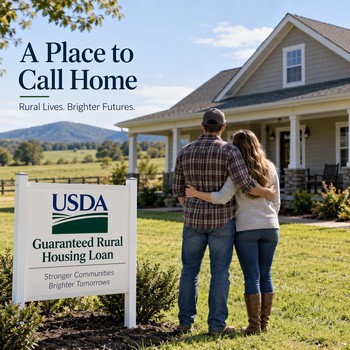 The USDA Guaranteed Rural Housing Loan helps
moderate-income families buy a home with no down payment. The United
States Department of Agriculture backs these loans through
USDA Rural Development. A private lender
funds the loan, and the government promises to cover most of the
loss if the borrower stops paying. That promise lets lenders offer
100% financing at a competitive rate.
I spent years as a loan officer, and I watched this program help buyers who thought they had no shot at owning a home. Many had steady jobs and decent credit but no cash saved up. This guide explains how the program works, who qualifies, what it costs, and how it compares to the direct option.
What Is a USDA Guaranteed Loan?
The official name is the Single Family Housing Guaranteed Loan Program. Congress created it under Section 502 of the Housing Act of 1949. The agency does not lend the money itself. It guarantees up to 90% of the loan to an approved USDA lender.
Banks, credit unions, and mortgage companies such as Rocket Mortgage all offer this product. Think of it as a guarantee loan: the government stands behind the lender, not the buyer. If you default, the lender files a claim and recovers most of its money. You still lose the house, so the guarantee protects the creditor, not the debtor.
Here are the main features of the program:
- No down payment for eligible buyers
- A 30-year term with a fixed interest rate
- No set loan limit, since your income and debts cap the loan size
- An upfront fee and an annual fee instead of private mortgage insurance
- Owner-occupancy required, so the home must be your primary residence
Who Qualifies for a Rural Development Mortgage?
You must meet three tests. Your household income must fall under the area limit. The property must sit in an approved location. And you must show you can repay the debt. Lenders also confirm that you do not already own a suitable home within commuting distance.
Income Limits and Household Size
Your household income cannot top 115% of the area median income. The program counts income from every adult in the home, not only the people on the loan. That rule catches many buyers off guard. A grown child who lives with you and works part-time adds to the household total.
The agency then subtracts allowances, such as $480 for each dependent child and certain childcare costs. Limits vary by county and household size. A family earning $115,000 might qualify in a high-cost county and fail in a cheaper one. Check our county income limits guide before you apply.
Eligible Rural Area and Property Rules
The program defines rural areas broadly. Many small towns and suburbs on the outskirts of larger cities qualify. Some towns with up to 35,000 residents still pass. Enter any address on the USDA property eligibility map before you make an offer.
The home must be modest, safe, and sound. It cannot have an in-ground pool built for income or land used for farming income. Inspectors also look at water, septic, and structural issues. Our guide to appraisal and inspection standards covers the common problems.
Credit Score and Debt-to-Income Ratio
The agency sets no official minimum credit score. Most lenders want a 640 score for automated approval through the Guaranteed Underwriting System, called GUS. Buyers below 640 can still get approved through manual underwriting with a stronger file. Learn more about credit score requirements for this program.
The standard debt-to-income ratio limits are 29% for housing costs and 41% for total debt. GUS may approve higher ratios when you show strong savings or a long job history. Our DTI breakdown shows how lenders run the math.
| Requirement | Guideline |
|---|---|
| Household income | Up to 115% of area median income |
| Property location | Approved address on the USDA map |
| Credit score | 640 for GUS approval; lower with manual underwriting |
| Housing ratio | 29% of gross monthly income |
| Total debt ratio | 41% of gross monthly income |
| Occupancy | Primary residence only |
Guarantee Fees and Your Interest Rate
The program charges two fees instead of private mortgage insurance. For fiscal year 2027, which runs from October 1, 2026, through September 30, 2027, the upfront loan guarantee fee is 1.00% and the annual fee is 0.35%. These rates match the prior year.
Most buyers roll the upfront fee into the loan amount. The annual fee gets split into 12 monthly payments. It shrinks each year because it tracks your unpaid balance. Compare that to FHA, which charges more on both sides.
| Cost on a $250,000 Loan | USDA Guaranteed | FHA (3.5% Down) |
|---|---|---|
| Upfront fee | 1.00% = $2,500 | 1.75% = $4,375 |
| Annual fee | 0.35% = $875 first year | 0.55% = $1,375 first year |
| Monthly cost, year one | About $73 | About $115 |
| Down payment | $0 | About $9,000 on the price |
Your lender sets the interest rate, not the government. Rates on these loans often run at or below conventional rates because the guarantee lowers the lender's risk. Shop at least three lenders, since pricing and fees vary. See how the costs stack up in our USDA vs. FHA comparison.
Plan for these costs at closing and beyond:
- Upfront guarantee fee, usually financed
- Annual fee, paid monthly with your payment
- Appraisal, title, and other closing fees
- Homeowners insurance and property taxes held in escrow
- Seller credits of up to 6% of the price to offset closing costs
Types of USDA Loans: Guaranteed vs. Direct Loan
Many buyers mix up the two programs. Both come from USDA RD, but they serve different income groups. The direct loan comes straight from the government, not a private lender. It serves low income households earning at or below 80% of area median income.
The direct program provides a payment subsidy that can lower the effective rate to as little as 1%. Terms run up to 33 years, or 38 years for some of the lowest-income applicants. Direct loans also carry county loan limits, while the guaranteed side has none.
| Feature | Guaranteed | Direct |
|---|---|---|
| Who funds it | Approved private lender | The agency itself |
| Income cap | Up to 115% of median | Up to 80% of median |
| Down payment | None | None for most buyers |
| Term | 30 years | 33 or 38 years |
| Payment help | No | Yes, based on income |
| Typical timeline | 30 to 45 days | Often several months |
What a Loan Application Packager Does
For the 502 direct loan program, many buyers work with a certified loan application packager. Packagers are often nonprofit housing groups. They gather your pay stubs, tax returns, and bank statements, then submit a complete file. A good packager can cut weeks off the wait. The guaranteed side does not use packagers, since your lender handles the file.
How to Apply for a USDA Guaranteed Loan
The process looks a lot like any other home purchase. The main difference is one extra review by the agency before closing. Follow these steps:
- Check the address on the property eligibility map
- Run your household income through the online income tool
- Find an approved lender and get preapproved
- Make an offer and order the appraisal
- Let your lender submit the file for a Conditional Commitment
- Close and move in
Your lender runs the file through GUS and sends it to the state office. The office reviews it and issues a Conditional Commitment. That review takes a few days to a few weeks, depending on workload. Each October, funding pauses for about a week while the new fiscal year starts, so plan around it.
First-time homebuyers often like this program because it pairs well with state down payment and closing cost grants. Ask your lender which local programs it accepts.
Refinancing a USDA Mortgage
You can refinance an existing guaranteed or direct loan into a new guaranteed loan. The streamline refinance options cut paperwork. The Streamlined-Assist version skips the new appraisal and most credit checks. You need 12 months of on-time payments, and the new payment must drop by at least $50 a month.
You cannot take cash out with this refinance. If you want cash, you need a conventional or FHA option instead. Our USDA vs. VA guide covers another path for veterans.
The USDA Guaranteed Rural Housing Loan remains one of the best deals for buyers outside big cities. No down payment, low fees, and fair credit rules open doors that other programs keep shut. Check the map, check your income, and talk to a lender before you rule it out.
Frequently Asked Questions
Do I need a down payment for a USDA Guaranteed Rural Housing Loan?
No. Eligible buyers can finance 100% of the appraised value. You still pay closing costs, but the seller can cover up to 6% of the sales price, and some buyers roll costs into the loan when the appraisal comes in high enough.
What credit score do I need for a USDA guaranteed loan?
The agency sets no official minimum. Most lenders look for a 640 score for automated approval. Buyers with lower scores can still qualify through manual underwriting if they show steady income and a clean recent payment history.
Does the USDA annual fee ever go away?
No. The 0.35% annual fee stays for the full loan term. It does shrink each year because it tracks your remaining balance. The only way to drop it is to refinance into a different type of mortgage.
Can I buy a farm or rental property with this loan?
No. The home must be your primary residence. You cannot use the program for investment property, vacation homes, or income-producing farmland. A home on a few acres is fine if the land does not produce income.
How long does USDA approval take?
Most guaranteed loans close in 30 to 45 days. The agency review adds a few days to a few weeks, depending on the state office workload. Plan for extra time in early October, when funding pauses for about a week at the start of each fiscal year.
Connect With Us
Please share – it really helps