Test for Radon in Your Home: A Guide to Radon Testing
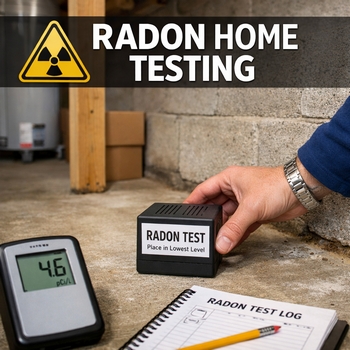 Radon is a naturally occurring radioactive gas that seeps into homes from the soil beneath buildings. You cannot see, smell, or taste radon, which makes testing the only way to know if your home has unsafe levels. The United States Environmental Protection Agency warns that radon is the second leading cause of lung cancer after smoking. Testing your home for radon is an easy procedure that takes only a few days to a few weeks and costs between $100 and $300 for most homeowners.
Home buyers, sellers, and current residents profit from understanding radon testing methods and what test results mean. This guide covers radon test kit options, how long testing takes, and when professional help makes sense.
Why Is Radon Testing Important for Homeowners
Why is radon testing important? The answer lies in health risk. Radon decays into radioactive particles that lodge in lung tissue when you breathe contaminated air. Over the years or decades, this exposure significantly increases the risk of lung cancer. The EPA estimates that radon causes about 21,000 lung cancer deaths annually in the United States.
Geographic location matters. Some areas have higher radon levels in your home due to soil composition and geology. National radon averages range from 0.4 to over 10 picocuries per liter, depending on where you live. Your state or county radon map shows relative risk levels.
Testing protects your family's health and your investment. Homes with high radon levels require radon mitigation systems, which cost $1,200 to $2,500 to install. Knowing your radon level before purchase helps you negotiate repairs or credits.
- Radon is invisible and odorless - testing is the only detection method
- EPA action level for radon is 4.0 picocuries per liter or higher
- Lung cancer risk doubles when radon exceeds safe thresholds
- Testing costs are minimal compared to health risks or future radon mitigation
- Home buyers should ask sellers about prior radon test results
Types of Radon Tests and Testing Methods
Two main categories exist: short-term test and long-term test. Each has strengths for different situations.
Short-term radon testing methods run between 2 and 90 days, with most lasting 2 to 7 days. These provide quick snapshots of radon levels and are well-suited for home sales, rental inspections, and baseline checks. Radon test kit devices include alpha track detectors, electret ion chambers, and continuous monitors. A laboratory analyzes passive devices after exposure, while electronic monitors display results directly.
Long-term test periods stretch from 90 days to one year, giving a more accurate picture of seasonal fluctuations. Radon levels vary with temperature, air pressure, and how homes are sealed. A long-term test captures these patterns and helps determine whether radon mitigation is needed. Home buyers rarely request long-term test results because the closing schedule is tight, but owners planning to stay put benefit from this approach.
Professional testing versus do-it-yourself (DIY) is another split. Certified inspectors and radon specialists conduct precise testing with calibrated equipment. DIY radon test kit options cost less but call for careful setup and shipping to a laboratory. EPA-approved test kit devices meet quality standards, though accuracy depends on proper placement and sealing.
- Short-term test takes 2 to 7 days; results arrive within 1 to 2 weeks
- Long-term test runs 90 days to one year for seasonal accuracy
- Alpha track detectors cost $10 to $30 and suit budget testing
- Continuous radon monitors display live readings; prices range from $600 to $2,000
- Professional inspectors charge $150 to $300 per test; radon detectors vary widely
Radon Testing Methods: Placement and Conditions
Radon testing methods require correct placement to yield reliable results. The EPA and radon program standards mandate that test kit placement follows tight protocols. Most radon test devices go in the basement, lowest livable level, or lowest level used regularly. Radon accumulates in these zones because heavier radon gas sinks.
During a radon test, keep windows closed except for normal entry and exit. Radon testing open windows artificially lowers readings and skews results. The EPA states that radon testing with open windows does not reflect real conditions. Air-conditioning and heating systems should run normally.
Placement must avoid direct sunlight, moisture, air drafts, and high-traffic zones. Closets, interior walls, and shelves work well for passive devices. Radon testing no basement homes? Place devices on the lowest floor actually occupied, such as a first-floor bedroom or living room. Crawl spaces count if regularly entered.
Some radon testing open windows scenarios occur during home inspections when inspectors must access other areas. A short-term test scheduled for 48 hours can tolerate brief window openings, provided they are documented. For accuracy, confirm the testing period excludes windows-open conditions.
- Place radon test kit devices 20 inches from walls and 3 feet above floor level
- Avoid kitchens, bathrooms, and laundry areas due to ventilation interference
- Radon testing open windows invalidates results; keep windows closed except normal use
- Temperature swings near 68°F are ideal; avoid areas with heating or cooling vents
- Document conditions and exact dates during radon testing for credibility
Is Radon Testing Included in Home Inspections
Is radon testing included in a home inspection? Not automatically. Most standard home inspection services do not include radon test kit analysis. Inspectors visually assess structure, systems, and safety but do not measure radon levels. Radon testing is a separate service with its own fee, equipment, and expertise.
Home buyers frequently request radon test results as part of due diligence. Contract language allows buyers to require testing at seller expense or to credit funds for testing after purchase. Savvy home buyers schedule radon testing during the inspection period to meet closing deadlines.
Some inspectors hold radon certifications and offer combined packages. Verify credentials before hiring. Certified radon program specialists undergo EPA training and maintain ongoing education. They understand regional radon geology and control techniques.
Understanding Your Radon Test Results
The EPA action level for radon is 4.0 picocuries per liter (pCi/L) averaged over time. This threshold does not mean 4.0 pCi/L is safe and 4.1 is dangerous. Risk is a continuum. Even at 2.0 pCi/L, lung cancer risk is higher than outdoor air. The EPA recommends testing and radon mitigation when radon levels reach 2.0 pCi/L or above.
National radon data shows U.S. average indoor radon level is 1.3 pCi/L. About 1 in 15 homes exceed 4.0 pCi/L. Geographic zones with higher uranium or radon-prone soil see radon levels consistently above national averages. Colorado, Pennsylvania, New Jersey, and the upper Midwest frequently report elevated radon levels in your home.
If your test results exceed 4.0 pCi/L, radon mitigation is advised. Reducing radon in homes involves sealing cracks, installing sub-slab depressurization systems, or increasing ventilation. Professional mitigation typically lowers radon levels by 50 to 99 percent. Retesting after radon mitigation confirms success; new tests run 24 to 48 hours minimum to measure post-mitigation radon level.
- EPA action level is 4.0 pCi/L; testing and radon mitigation are recommended above 2.0 pCi/L
- National radon average is 1.3 pCi/L indoors versus 0.4 pCi/L outdoors
- Risk increases linearly with radon exposure over time
- Brief fluctuations of ±25 percent are normal in radon levels
- Retesting after radon mitigation ensures the system works properly
Frequently Asked Questions About Radon Testing
What Does Radon Testing Mean and How Does It Work?
What does radon testing mean? Testing measures the concentration of radon gas in indoor air. Passive devices (alpha track or electret detectors) accumulate radon particles over weeks or months. Active devices use electronic sensors to detect radon decay products in real time. Both methods quantify radon in picocuries per liter, a standard unit of radioactive decay. The EPA sets this unit as the basis for health recommendations.
Should You Do Radon Testing Before Buying a Home?
Should you do radon testing before closing? Yes. Radon testing during the inspection period (typically 7 to 10 days) lets you identify problems early. Buying a home with radon above 4.0 pCi/L is possible if the seller funds radon mitigation or credits closing costs. Radon test results give you negotiating leverage. A short-term test suffices for purchase decisions; you can conduct a long-term test after closing if desired.
What Is the Cost of Radon Testing?
DIY radon test kit costs range from $10 to $50 per device, plus $15 to $35 for laboratory analysis. Professional radon test fees run $150 to $300 per test. Continuous radon monitors for immediate tracking cost $600 to $2,000 upfront but provide detailed data. Radon mitigation systems cost $1,200 to $2,500, with fan installation and ductwork as major expenses. Factor in annual maintenance and certification retesting when budgeting.
Can You Test for Radon in Water?
Radon dissolves in groundwater and poses inhalation and ingestion risks. Well-water radon testing requires specialized laboratory analysis through certified facilities. EPA guidance recommends testing private water supplies if soil radon levels are high or if lung cancer risk concerns occur in your area. Water radon is less common than air radon as a health hazard, but state drinking water programs address this when needed.
How Long Does Radon Testing Take?
Short-term test devices produce results within 2 to 90 days, typically 2 to 7 days for quick answers. Long-term test periods last 90 days to one year for seasonal patterns. Continuous electronic monitors display results immediately. Shipping a mail-in radon test kit to a laboratory adds 1 to 2 weeks to analysis. Plan testing timelines around closing deadlines, inspection periods, and seasonal shifts if you suspect seasonal shifts alter your home.
Radon Mitigation and Following Actions
If test results show elevated radon levels, radon mitigation lowers exposure. The most common method is sub-slab depressurization, which draws air from beneath the foundation through a radon vent pipe and exhausts it above the roofline. This reduces radon by 50 to 99 percent. Sealing cracks in foundations, installing sump-pump covers, and enhancing ventilation also help lower radon naturally.
Retest your home radon levels 24 to 48 hours after radon mitigation completes. Post-mitigation radon level testing confirms the system performs as designed. Annual retesting thereafter tracks enduring effectiveness. Certified radon program specialists handle mitigation to EPA standards.
Get a radon test today. Knowledge of your radon level empowers you to make smart decisions about health, home safety, and purchases. Testing is affordable, fast, and essential for peace of mind.
Connect With Us
Please share – it really helps