USDA Loans and the Underground Oil Tank: What Every Homeowner Needs to Know
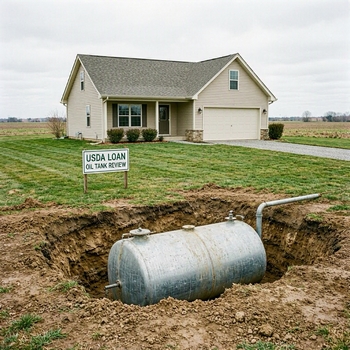 Buying a home with a USDA loan offers many benefits. Such loans frequently have low interest rates and require no down payment. But the property must meet strict guidelines. A frequent problem is an underground oil tank on the property. This can create problems for the buyer and the seller. Understanding the rules is important before you start the process.
What Is a USDA Loan?
A USDA loan is a mortgage backed by the U.S. Department of Agriculture. It helps people buy homes in rural and suburban areas. The program aims to boost homeownership and community development. The loans are for low- and moderate-income borrowers who might not qualify for other loans. The property must be the buyer's main home. It cannot be an investment property or a second home.
USDA loans have two main types. Guaranteed loans come from approved lenders. The USDA guarantees up to 90 percent of the loan if the borrower defaults. Direct loans come from the USDA itself. Borrowers apply for these through the USDA. Each type has its own income limits and requirements.
How an Underground Oil Tank Affects a USDA Loan
An underground oil tank can be a major roadblock for a USDA loan. The USDA has strict rules about environmental hazards on a property. An underground tank presents a risk of leaks and soil contamination. This can affect the property's value and safety. A leak from a heating oil tank can contaminate the soil and groundwater. Cleanup of contaminated soil can be very expensive.
The USDA requires an environmental risk survey for all loan applications. This form screens the property for possible hazards. One key question asks if there are any underground storage tanks (USTs) on the property. The form also asks about aboveground storage tanks (ASTs). The lender must check the box for "yes," "no," or "unknown" regarding storage tanks. If the answer is "yes," the lender must give more details about the oil tank.
The underground oil tank can be a dealbreaker for a USDA loan. If a tank is found, the lender will likely require its removal. This is because the tank is a possible environmental hazard. The property must meet the USDA's safety and suitability-for-habitation standards. An old or leaking tank is a risk to the natural environment and the people living nearby.
Understanding Underground Storage Tanks (USTs)
The EPA defines a UST as any tank with 10 percent or more of its volume underground. This includes any connected piping. The federal UST regulations cover tanks that store petroleum or hazardous substances. These regulations apply to most tanks, but there are some exceptions.
Some tanks are excluded from federal UST rules. These include:
- Farm and residential tanks of 1,100 gallons or less holding motor fuel for noncommercial uses
- Tanks storing heating oil used on the same premises where it is stored
- Tanks located on or above the floor of underground areas, like basements or tunnels
- Septic tanks and systems for collecting wastewater and storm water
- Flow-through process tanks that are part of production processes
- Pipeline facilities and surface impoundments, pits, ponds, or lagoons
Even if a tank is excluded from federal regulations, it still matters for a USDA loan. The USDA's environmental risk form is a screening tool. It is used to assess all possible environmental hazards, not just federally regulated ones. A heating oil tank in a basement might be excluded from EPA rules but still flagged by the USDA survey.
Why Underground Oil Tanks Are a Problem
Older underground heating oil tanks often cause problems. Many are made of bare steel. Steel can corrode over time, especially when buried in the ground. Corrosion can lead to pinhole leaks. These leaks can go undetected for years. The heating oil seeps into the surrounding soil and can reach the water table. This type of contamination is a serious risk to the environment and public health. Environmental contractors are often needed to assess and fix the damage.
Contamination from a leak is expensive to fix. The remediation process includes removing the oil tank, excavating the contaminated soil, and testing the groundwater. The cost of tank removal and cleanup can run into thousands or even tens of thousands of dollars. A property owner may not know about a leak until it is discovered during a soil test. This can happen during a home inspection or an environmental impact assessment for a loan.
The USDA Environmental Risk Survey Form
The USDA uses Form FSA-851 to screen properties. It is the first step in the due diligence process. The form asks about the presence of underground storage tanks and other features. These features include lagoons, pits, and ponds that could pose environmental hazards. The form helps the lender comply with several federal environmental laws.
Part of the form specifically asks about USTs or ASTs. The preparer must answer "yes," "no," or "unknown." If the answer is "yes," they must complete a table with more information. This table asks for:
- Tank Location: A brief description of where the tank is located on the property.
- Size: The approximate or exact size of the oil tank.
- Type: Whether the tank is a UST or AST.
- Registration: Whether the UST is registered with the state.
- Contents: What substance is in the tank (e.g., heating oil, gasoline, or fuel oil).
- Leakage: Whether the tank has ever leaked.
The preparer must also attach photographs of any UST or AST fill pipes and vent pipes. An interview with the owner or occupant is usually necessary to get these answers. The form is a critical part of the loan application. It protects the lender and the USDA from potential liability.
What Happens if a Tank Is Found?
If an underground oil tank is found on the property, the lender will take action. They will likely require the seller to remove your underground tank . The seller must also test the soil for contamination. If contamination is found, the seller must pay for the cleanup. This must happen before the loan can be approved. The tank removal process must follow all state and local rules.
In some cases, the buyer and seller may negotiate who pays for the tank removal. It is often a point of negotiation in the sale. The seller might agree to pay for it to close the deal. Or the buyer might get a credit to cover the cost. But the underground oil tank must be dealt with. The USDA will not approve a loan for a property with an undetected environmental hazard.
There are also federal regulations that cover the closure of USTs. When a tank is permanently closed, the owner must follow specific rules. These rules include:
- Notifying the regulatory agency before closing the tank
- Emptying and cleaning the tank
- Removing the tank from the ground or filling it with inert solid material like sand
- Assessing the site for soil contamination and taking corrective action if needed
- Keeping records of the closure for at least three years
These steps are important to protect the environment and public health. A property owner must follow these rules to avoid fines and judicial trouble. The USDA loan process makes sure these steps are taken before a loan is issued.
Comparing Storage Tank Types
| Feature | Underground Storage Tank (UST) | Aboveground Storage Tank (AST) |
|---|---|---|
| Location | At least 10% of volume underground | On the surface, visible and accessible |
| Risk | Higher risk of undetected leaks and soil contamination | Lower risk, leaks are easier to see and address |
| Regulation | Strict federal and state regulations (40 CFR Part 280) | Regulated by SPCC, fire codes, and state rules |
| Inspection | Requires specialized release detection methods | Visual inspections are easier and more common |
| Cost | More expensive to install, maintain, and remove | Generally less expensive to install and maintain |
Tips for Homeowners and Buyers
If you are buying a home with a USDA loan, here are some tips. First, always check the property for an underground oil tank. Ask the seller directly. Look for signs like fill pipes or vent pipes sticking out of the ground. You can also check with the local fire department or state environmental agency. They might have records of underground storage tanks on the property.
If you find an underground oil tank, get a professional inspection. Hire a qualified environmental contractor to test the tank for leaks. They can also test the soil around the tank. This will help you understand the full extent of any contamination. It will also give you a better idea of the cleanup costs.
If you are the seller, consider removing the oil tank before listing the property. This can help you dodge delays and negotiation issues later. It can also make your property more attractive to buyers. Buyers are often wary of properties with old underground heating oil tanks. Proactive tank removal shows you are a responsible property owner.
Frequently Asked Questions
Does the USDA loan program allow properties with underground storage tanks?
No, generally not. The USDA loan program requires properties to be safe and free from environmental hazards. An underground storage tank is considered a hazard. The tank must be removed, and any soil contamination cleaned up, before the loan can close.
Who is responsible for removing an underground oil tank when using a USDA loan?
The responsibility is usually negotiated between the buyer and seller. Typically, the seller is responsible for removing the tank. This is because the tank is a pre-existing condition. The seller must deliver a safe and hazard-free property to the buyer.
How much does it cost to remove an underground oil tank?
The cost can vary widely. It depends on the tank's size, location, and whether there is contamination. Basic tank removal can cost a few thousand dollars. If there is soil contamination, the cost can be tens of thousands of dollars.
What is a UST?
UST stands for underground storage tank. The EPA defines it as a tank and its connected piping that has 10 percent or more of its volume underground. These tanks are heavily regulated to prevent leaks and environmental damage.
Are all heating oil tanks regulated by the EPA?
No. The federal UST regulations do not apply to tanks storing heating oil used on the same premises. However, these tanks are still regulated by state and local authorities. They are also a major concern for lenders like the USDA.
Connect With Us
Please share – it really helps